10 Instagram Influencer Database Tools Compared for 2026

Instagram's advertising audience reached 1.74 billion users in January 2025, according to DataReportal's analysis of Meta's advertising-planning data. That scale makes discovery valuable, but it also explains why a large Instagram influencer database can still leave you without a usable contact list.
Most wasted sign-ups start with a mismatch. A searchable creator directory helps you shortlist influencers. A campaign-management platform helps you coordinate relationships, content, reporting, and payments. A defined-audience export service turns a particular account's followers, following list, or hashtag audience into a spreadsheet. These aren't interchangeable purchases.
For defined-audience scraping, about 10% of collected profiles have public emails on average, although the niche matters heavily. A profile count isn't an email count, and neither tells you whether someone is a suitable collaboration prospect. The data model matters as much as database size.
The tools below are evaluated by those three jobs, not by feature count. Some overlap, but each has a clear reason to buy and a clear limit.
Buying rule: Decide what you need to leave with: a shortlist, a running creator program, or an exportable contact file.
Read pricing transparency separately from affordability. Published plans can still restrict searches, profile analysis, contact reveals, and exports. A free search screen also doesn't establish that you can download the emails you find.
Table of Contents
- Define the modules before the demo
- Watch the allowance structure
- Credits are part of the cost
- Connection requirements affect coverage
- Trial access isn't contract flexibility
- Validate the records, not just the search
- What collection doesn't establish
- How the ten tools compare on fit, pricing, trials, and contact export
- Match the Tool to the Job Before You Pay for Anything
- Test the output before the subscription
1. Heepsy
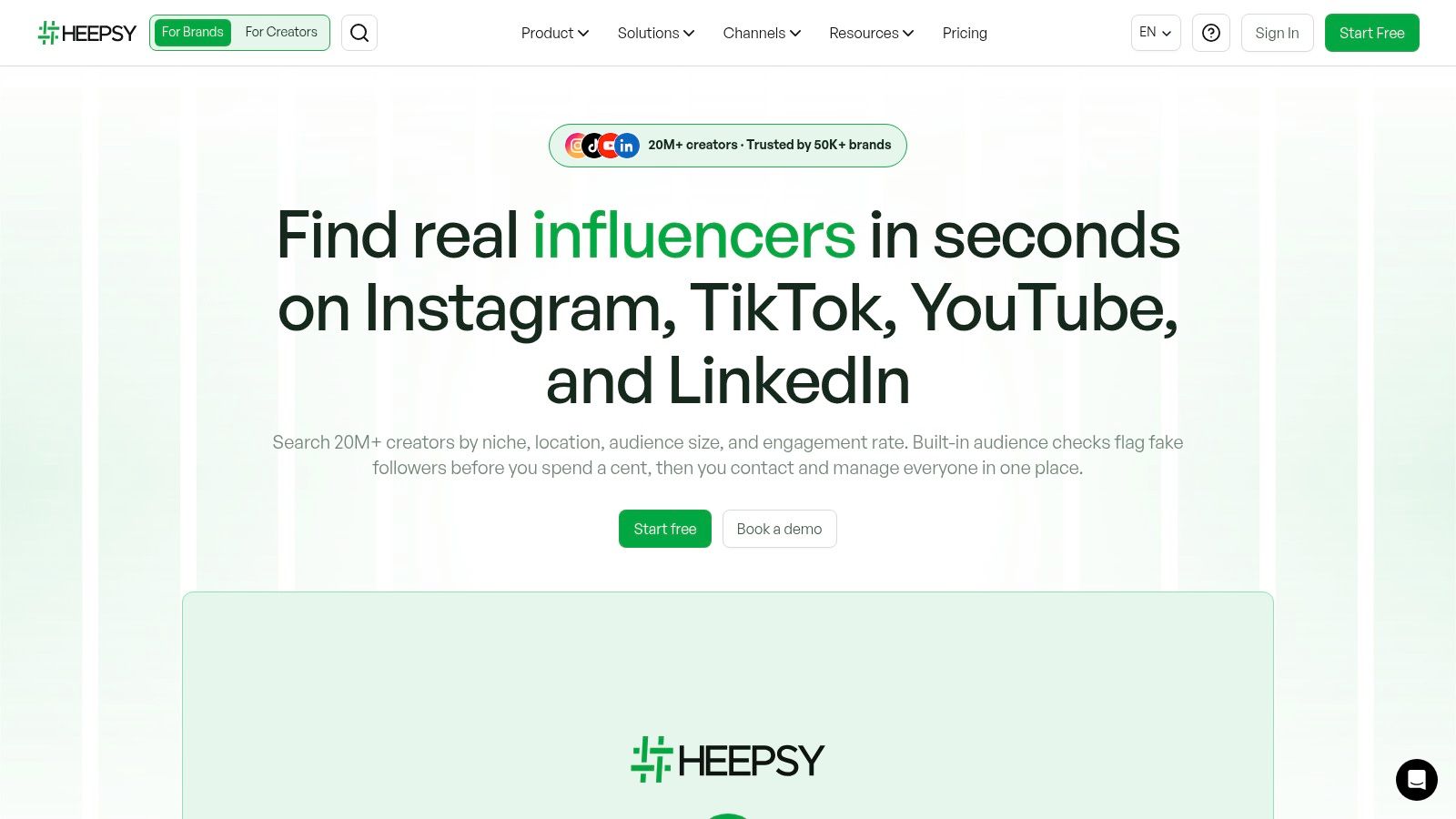
Best fit: self-serve creator discovery with room to manage outreach.
Heepsy sits between a searchable directory and a campaign platform. You can search creators across Instagram and other social platforms, evaluate profiles, build shortlists, and organize outreach. That makes it a reasonable starting point when you know the creator characteristics you want but haven't identified specific accounts.
Its filters cover niche, location, follower count, engagement, language, and audience attributes. Keyword, lookalike, handle, and AI-assisted search provide different routes into the same discovery task. For a practical search sequence, the Instagram influencer finder guide helps distinguish creator selection from collecting an audience.
Where the limits matter
- Free access: A free plan lets you explore the workflow without immediately committing to a subscription.
- Pricing transparency: Published plans help you compare allowances before paying.
- Email export: CSV or Excel exports can include contact emails for eligible profiles with revealed contact details, not every search result.
Heepsy's main trade-off is the connection between discovery limits and contact access. A useful shortlist may still require paid access before it becomes an outreach file.
I'd choose it for repeated creator searches and manageable campaign workflows. I wouldn't choose it solely to extract the followers of an already selected Instagram account. That's a different collection job.
2. Modash
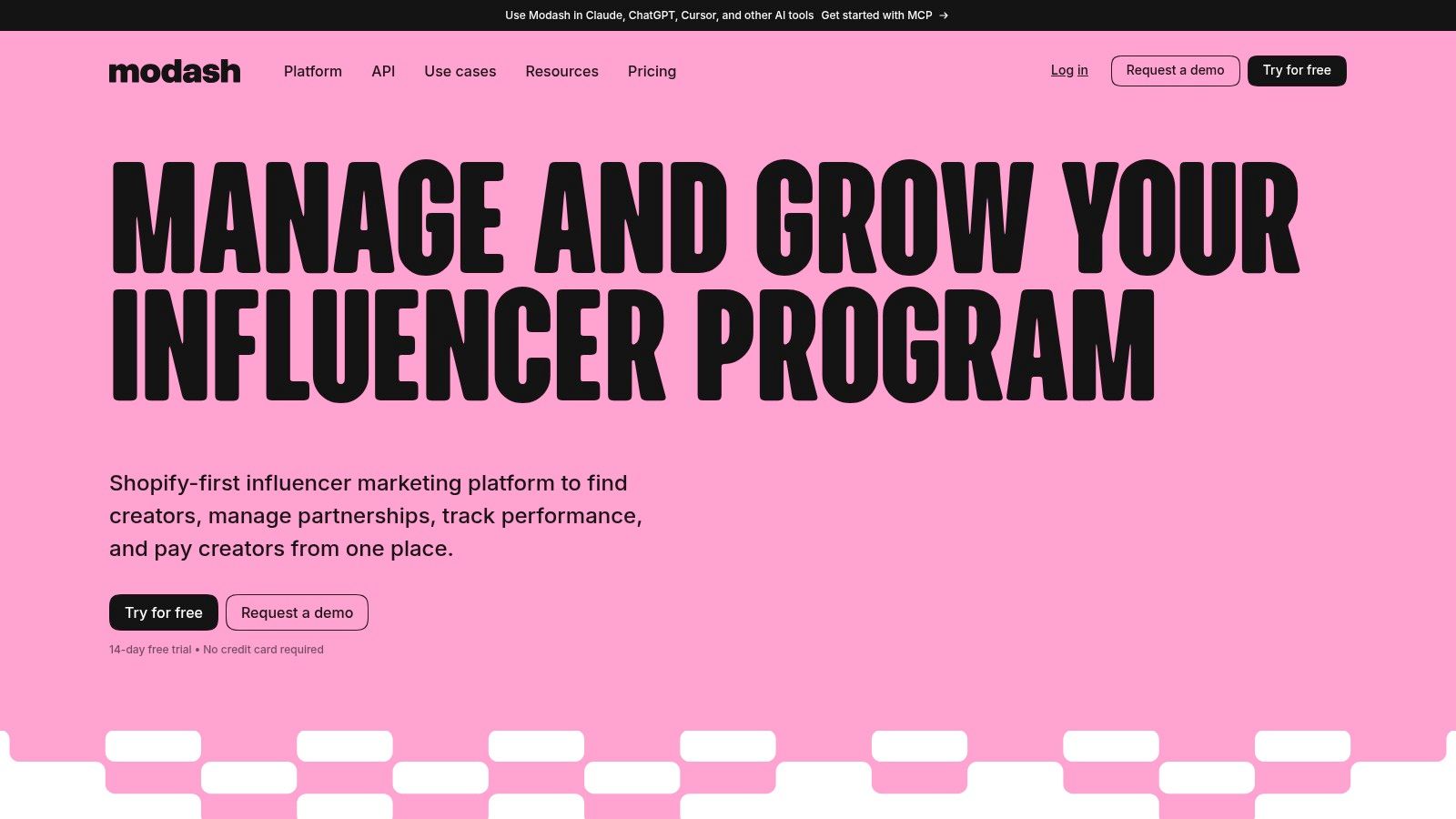
Best fit: ongoing creator programs, especially those connected to Shopify.
Say an ecommerce brand needs to find creators, send products, track content, and pay partners. A spreadsheet solves only the sourcing handoff. Modash connects discovery with those continuing operational tasks.
Search combines detailed filters, AI assistance, visual matching, and lookalike discovery. Audience demographics and authenticity checks help you evaluate whether the creator reaches the intended customer. Collaboration history adds context before you send a proposal.
The stronger reason to consider Modash is what happens after discovery. Relationship management, campaign tracking, payments, and Shopify-connected gifting and affiliate workflows belong to the same program.
Don't pay for campaign infrastructure unless someone on your team will use it after the shortlist is finished.
Test the full handoff
Modash advertises a trial and published subscription pricing. Use that access to follow a candidate from discovery into a saved relationship record, then inspect the contact and export allowances attached to your intended plan.
Email availability, contact access, and export rights are separate questions. Don't assume that finding a profile establishes unrestricted access to its contact information.
Modash is less compelling when your only deliverable is a standalone contact file. For recurring partnerships, however, keeping discovery and operations together can justify the broader subscription. The decision depends on whether you're buying data or running a program.
3. HypeAuditor
Best fit: audience-quality assessment before committing campaign budget.
A creator can look suitable by niche and follower count while still having an audience you shouldn't pay to reach. HypeAuditor puts audience authenticity and performance analysis at the center of discovery.
Its search tools support creator shortlisting, while audience-quality analysis and rankings help buyers investigate the accounts behind the headline metrics. That's useful when you need to defend a selection decision to a client or a budget owner.
The distinction matters because follower scale alone is a weak selection method. SocialPilot's Instagram statistics report a 2025 median Instagram engagement rate of 0.30%, while nano influencers reportedly achieved 1.73%. Those benchmarks support investigating smaller creators, not assuming any individual account will reproduce them.
Buy analysis, not certainty
- Strength: Audience-quality information gives you more to examine than popularity.
- Free access: Some tools and demo capabilities are available without a full platform purchase.
- Pricing and export: Platform pricing generally requires a sales conversation; establish contact-export entitlements during that discussion.
Use an Instagram audience analysis workflow to combine platform metrics with manual review of content, comments, and commercial fit.
HypeAuditor doesn't turn authenticity estimates into guaranteed campaign outcomes. It also isn't the obvious purchase for a simple contact-list job. I'd prioritize it when the cost of selecting the wrong creator outweighs the inconvenience of a more analytical workflow.
4. Upfluence
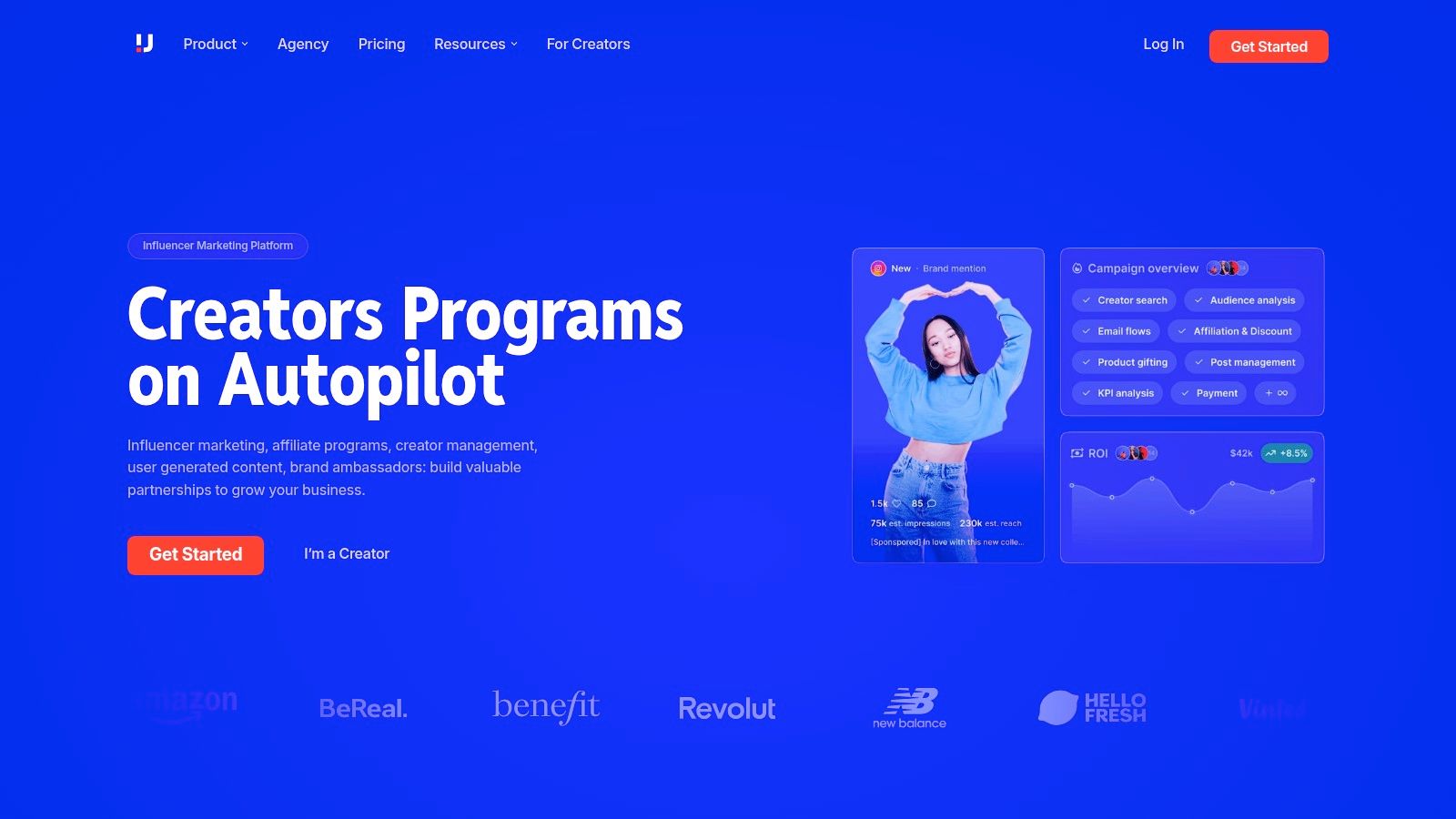
Best fit: teams buying discovery as part of broader campaign operations.
Upfluence makes more sense as an operational purchase than as a directory subscription. Creator search, applications, lookalike discovery, analytics, and optional payment workflows address different stages of a creator program.
Its modular structure is the attraction and the complication. A team can request selected capabilities rather than treating every feature as essential. But buyers need a clearly defined scope before they can compare the quote with another platform.
For example, a brand recruiting creators through applications has a different requirement from an agency researching unfamiliar markets. Both may need discovery, but only one may need the same application and payment setup.
Define the modules before the demo
- Discovery requirement: Specify the markets, niches, and creator types you must find.
- Operational requirement: Separate campaign analytics from payments, payout currencies, and tax-document handling.
- Data requirement: Establish whether contact details and usable exports are included in the proposed configuration.
Pricing is custom-quoted, so a public starting price won't settle the buying decision. Free platform access and email-export rights shouldn't be assumed from a product demonstration.
The Instagram influencer marketing guide can help frame the campaign process before you scope software.
Upfluence doesn't remove the need to define your workflow. For a small team seeking occasional lists, the modules may introduce more purchasing and implementation work than the job warrants.
5. Influencity
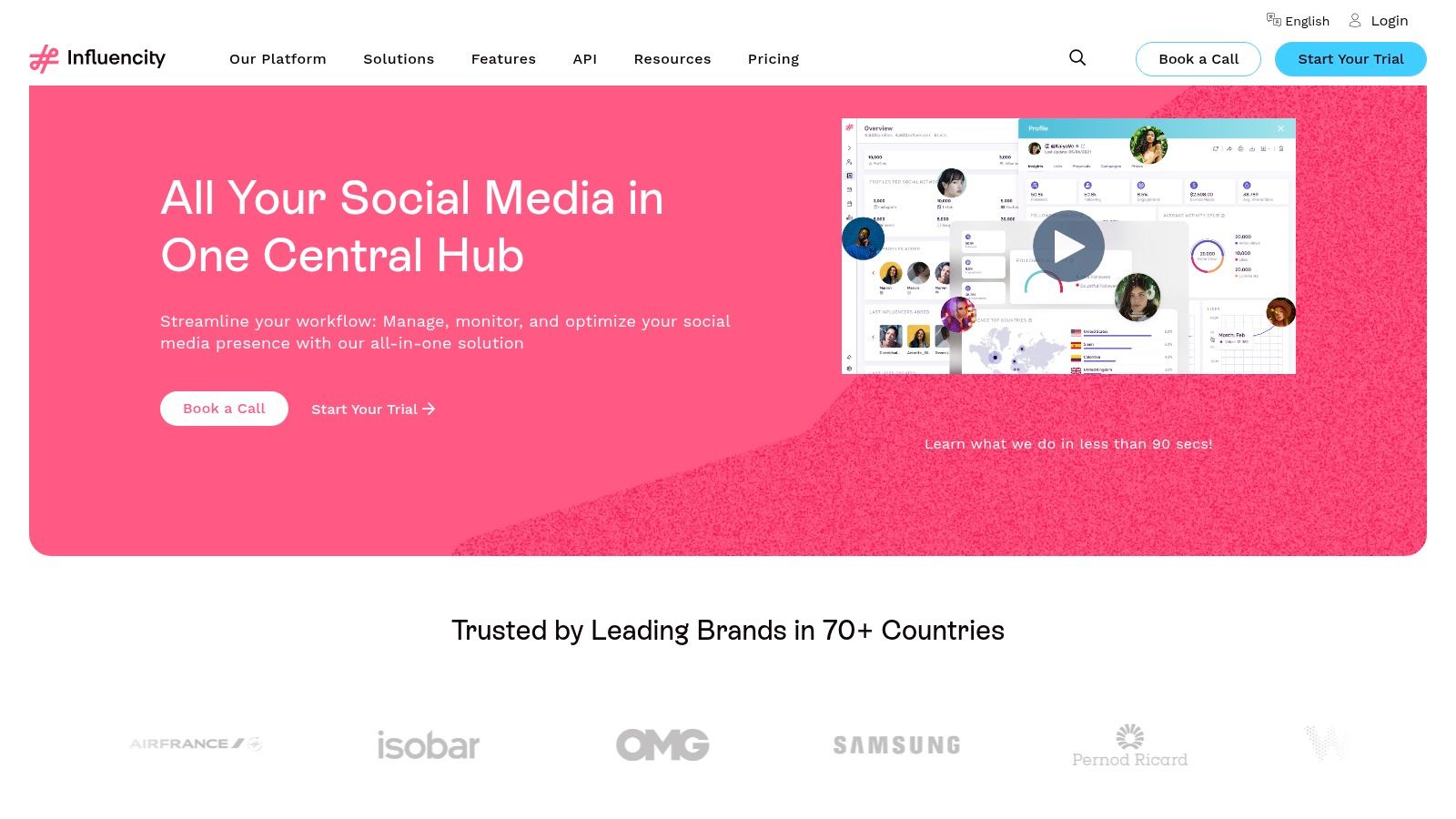
Best fit: preserving creator relationship history beyond initial discovery.
The useful distinction in Influencity is its separation of discovery, relationship management, campaigns, and reporting. A creator record can retain contact details, correspondence, notes, and pricing history instead of leaving that context scattered across spreadsheets.
That matters when several people work with the same creator. A shortlist tells the next account manager who someone is. A maintained relationship record explains what was discussed, what was agreed, and whether another approach makes sense.
Discovery includes filters for interests, brand affinity, and audience demographics. Search-result exports support work outside the platform, but exported results and analyzed profiles aren't necessarily the same purchase.
Watch the allowance structure
Search access doesn't automatically mean unlimited analysis. Different product components and allowances can affect how thoroughly you investigate a shortlist.
- Useful capability: Keep relationship context attached to the creator rather than to an individual employee's inbox.
- Export caveat: Confirm which contact fields appear in the actual download.
- Coverage caveat: Analysis eligibility and processing status can exclude profiles you expected to assess.
The available plan details don't establish a single comparable starting package or unrestricted free access. Budget around the combination of discovery, analysis, and relationship tools you'll really use.
Influencity doesn't guarantee that every newly discovered profile already has processed metrics. I'd favor it when relationship continuity matters, not when the only requirement is downloading a fresh audience list.
6. Favikon
Best fit: exploring creator categories and comparing candidates.
Public rankings make Favikon approachable before a buyer commits to a paid workflow. You can explore category and country rankings, then use discovery tools to investigate niches, locations, platforms, and creator performance.
That approach works well when you need a view of a market before building a shortlist. Lookalike discovery and creator reports provide additional routes beyond a basic keyword search.
Scores need interpretation. Favikon's engagement benchmark report discusses benchmarks drawn from different samples and engagement definitions. The practical lesson is to compare like with like rather than treating every displayed rate as interchangeable.
Evaluation habit: Review the creator's recent content before accepting the ranking as a buying recommendation.
Credits are part of the cost
Favikon publishes plan options, which makes initial budgeting easier than a fully custom quote. Its credit-based system still deserves attention because searches, results, and some filtering actions can consume allowances.
Test realistic queries rather than browsing broad categories indefinitely. A niche label may capture adjacent content that looks relevant in search but doesn't fit your campaign.
Favikon is primarily a discovery and evaluation purchase. It doesn't serve the same job as extracting a selected account's audience, and email export shouldn't be inferred from access to creator reports. Public rankings offer exploration, not proof of unrestricted contact access.
7. Meltwater Klear
Best fit: campaign-oriented discovery within a wider marketing workflow.
Visual fit can be difficult to express through category filters. Meltwater's influencer search offering, associated with Klear, supports searches using descriptions, images, campaign references, or social handles.
That gives buyers a useful route when the brief is aesthetic rather than purely demographic. A skincare brand might need a particular presentation style, while an agency might want creators whose work resembles an approved campaign reference.
Audience demographics, historical performance, shortlisting, and campaign organization extend the workflow beyond visual discovery. Registered creators who authenticate their accounts can also have vetted profiles.
Connection requirements affect coverage
Some capabilities depend on account type, creator connections, or available information. That means a profile appearing in search doesn't establish that every desired metric or campaign function will be available.
- Strong use case: Evaluate content style alongside audience and historical performance.
- Access question: Distinguish a visible profile from an authenticated creator relationship.
- Buying constraint: Fixed public pricing and unrestricted free platform access aren't established in the available details.
Email-export rights also need to be explicit in the proposed package. A shortlist or campaign report isn't necessarily a portable contact database.
I'd consider Meltwater Klear when the team also values Meltwater's wider marketing environment. For a buyer seeking a low-cost standalone export, the sales process and account-connection dependencies can be unnecessary friction.
8. Creator.co
Best fit: sourcing creators and carrying the work into managed campaigns.
Creator.co combines creator discovery, outreach, campaign management, performance reporting, and payments. Buyers can choose between self-serve, managed, and enterprise approaches rather than treating software access as the only service model.
That distinction matters for small teams. A founder may have enough time to approve creators but not enough to coordinate every outreach message and deliverable. An agency may prefer direct operational control and need only the platform.
AI matching and outreach tools support recruitment across Instagram, TikTok, and YouTube. Campaign tracking and performance insights become relevant once those recruits turn into active partnerships.
Trial access isn't contract flexibility
Creator.co advertises a trial and published pricing. Its self-serve offer also carries a minimum commitment, so evaluate the paid terms separately from the ease of starting the trial.
Contact credits and insight reports are plan-dependent. Run a representative search and inspect what consumes an allowance before deciding that the advertised subscription covers your expected workload.
- Choose self-serve: Your team can own outreach, approvals, and campaign administration.
- Consider managed support: Execution capacity is the bottleneck.
- Choose a simpler tool: You only need a portable list and won't use campaign functions.
Creator.co doesn't make every discovered profile an unrestricted email export. Establish the available contact fields and download rights before relying on it for an external CRM workflow.
9. InflDB
Best fit: searchable profiles and paid contact exports without a full campaign suite.
InflDB is closer to what many buyers mean when they search for an Instagram influencer database. You filter creators by attributes such as country, city, and topic, then export suitable profiles.
The attraction is focus. If your team already handles outreach and relationships elsewhere, an additional campaign-management environment may add little value. InflDB concentrates on finding records and making paid contact data available.
A limited free Basic plan allows exploration, while the paid plan includes email contacts and exports. Published plan information makes the buying model easier to understand than a custom enterprise proposal.
Validate the records, not just the search
- Relevance: Check whether topic filters capture creators who publish the content you need.
- Contact usefulness: Inspect whether an address belongs to the creator, a manager, or another business contact.
- Export suitability: Confirm that the fields fit your spreadsheet or CRM import.
The trade-off is depth. InflDB isn't a substitute for detailed audience-authenticity analysis, continuing campaign operations, or payment management.
It also doesn't solve defined-audience collection merely because it exports records. Searching a pre-existing creator database differs from collecting the followers or commenters of a selected account.
I'd shortlist InflDB for a straightforward directory-to-export workflow. I'd test its niche and geographic coverage before treating the paid contact access as sufficient reason to buy.
10. HarvestMyData
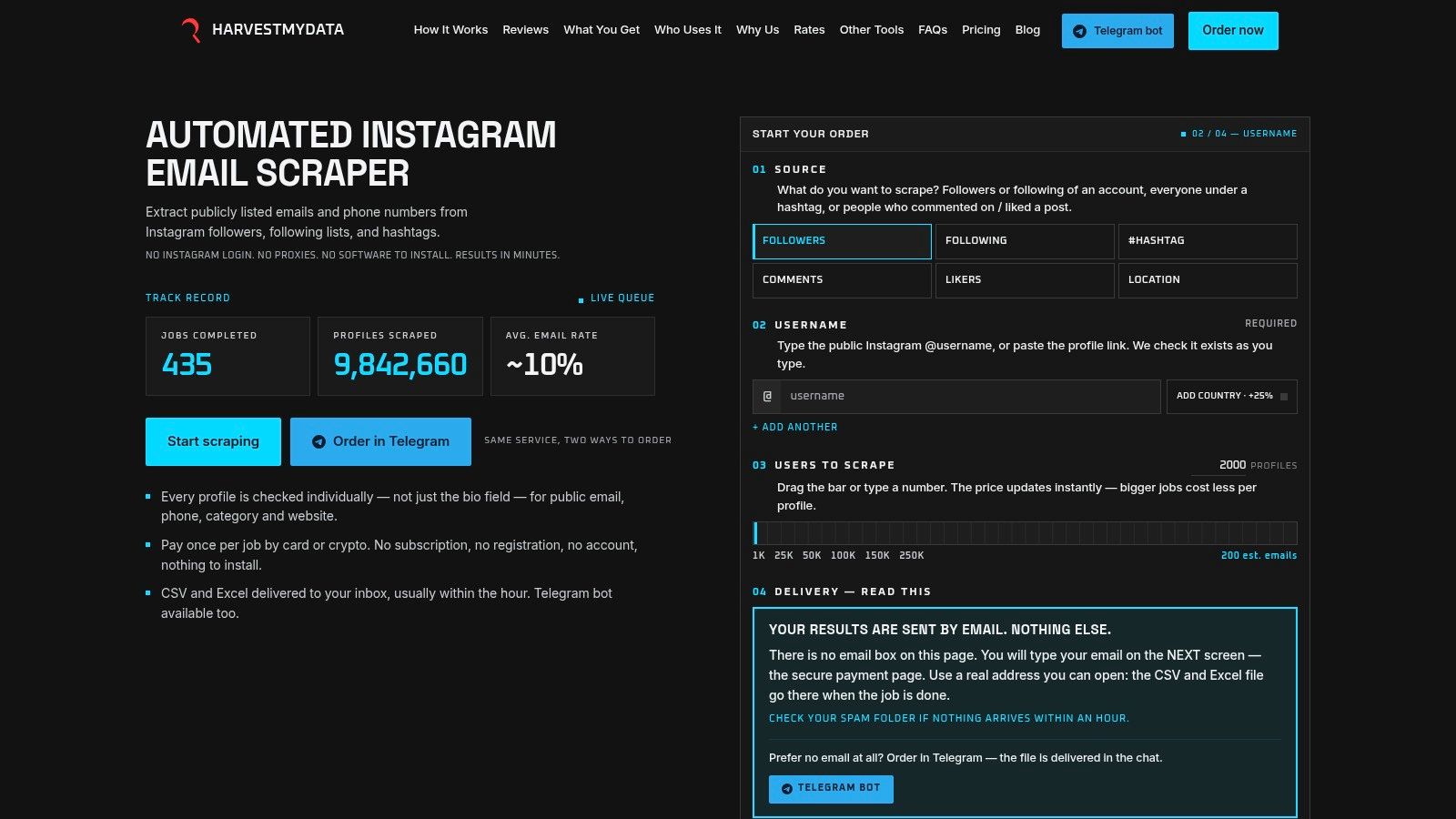
Best fit: turning an already defined Instagram audience into a contact file.
HarvestMyData isn't a conventional searchable influencer directory. Our pay-per-job service collects defined audiences, including followers, following lists, hashtags, commenters, and likers, and delivers structured CSV or Excel files. Pricing starts at $3 for 1,000 profiles, with a trial available on request.
The distinction is the starting point. You choose the source audience rather than search a catalog for creators matching demographic filters. That can suit a founder researching a niche community or an agency building a prospecting file around relevant public accounts.
What collection doesn't establish
We check every profile individually beyond the bio field for publicly listed contact information and business context. Customers don't provide an Instagram login, and we don't access private accounts or protected content.
- Useful output: Public contact details and profile fields support spreadsheet and CRM workflows.
- Visibility: Live job tracking shows collection progress and emails found.
- Limit: Collection doesn't establish audience authenticity, campaign performance, or permission to send marketing.
A follower, commenter, or liker isn't automatically an influencer. Review the exported profiles before treating them as creator prospects.
Public visibility also needs context. Metricool's Instagram content playbook discusses influencer disclosure responsibilities, a separate issue from contact collection. Neither a public email nor an extracted profile establishes that every downstream use is appropriate.
How the ten tools compare on fit, pricing, trials, and contact export
| Item | Best for | Published pricing | Free plan or trial | Email export |
|---|---|---|---|---|
| Heepsy | Creator discovery and campaign workflows | From $69/month with annual billing | Free plan available | CSV or Excel export; emails available for eligible unlocked profiles |
| Modash | Ongoing creator programs and Shopify workflows | From $199/month | 14-day trial | Not specified |
| HypeAuditor | Audience authenticity checks and creator vetting | Custom pricing; contact sales | Some free tools and demo versions | Not specified |
| Upfluence | Creator discovery and campaign operations | Custom quote | Not specified | Not specified |
| Influencity | Creator discovery, relationship management, and reporting | Not specified | Not specified | Search-result exports; contact details can be stored in creator records |
| Favikon | Creator discovery, rankings, and evaluation | Starter €99/month; Standard €199/month; Pro custom | Public rankings available to explore | Not specified |
| Meltwater Klear | Vetted creator research and campaign organization | No public fixed pricing found | Not specified | Not specified |
| Creator.co | Creator sourcing and campaign management | $299/month; three-month minimum | 14-day trial | Contact credits are plan-limited; export details not specified |
| InflDB | Finding and exporting influencer profiles | Premium €139/year | Free Basic plan | Paid plan includes email contacts and exports |
| HarvestMyData | Bulk collection of a defined Instagram audience | Pay per job | Trial of up to 1,000 accounts on request | CSV or Excel delivery; public contact details may be included but are not guaranteed |
Match the Tool to the Job Before You Pay for Anything
The right Instagram influencer database depends on the deliverable your team needs. A shortlist, a managed creator program, and a contact file require different capabilities. Buying the broadest platform won't fix a mismatch between those jobs.
For searchable creator discovery, start with Heepsy, Favikon, or InflDB. Consider HypeAuditor when audience-quality assessment is central to the decision. Test whether the platform finds relevant creators in your actual market, not whether it returns an impressive volume of vaguely related accounts.
For ongoing campaign programs, compare Modash, Upfluence, Influencity, Meltwater Klear, and Creator.co around operational requirements. Relationship history, product gifting, content tracking, reporting, and payments matter only when your team needs them. Buyers planning affiliate or outcome-linked partnerships can also review these platform options for performance-based creator campaigns.
Test the output before the subscription
Use a trial or free tier to run a narrow, realistic search. Pick the niche, geography, and creator type you intend to approach, then inspect the records you can actually save or export.
- For discovery: Review content relevance and distinguish creator location from audience location.
- For campaigns: Follow a candidate through outreach, relationship management, and reporting.
- For contact files: Check available emails, duplicate records, source context, and usable business information.
Measure useful results against the work required to obtain them. A longer list isn't better if your team must remove irrelevant accounts, reconstruct missing context, or manually recover contact fields.
For defined-audience outreach, start with the source. A relevant following list, specialist hashtag, or discussion audience can provide a more purposeful starting point than a broad creator category. Keep source information and collection timestamps attached to the records so your team can explain why each person entered the workflow.
A public contact address is evidence of availability, not blanket permission for bulk outreach.
Review each platform's terms and the data-protection and direct-marketing rules that apply to your situation. Distinguish a collaboration inbox from a general personal address, honor opt-outs, and maintain suppression records. When a proposed use is unclear, resolve that before uploading the list to an outreach system.
Choose the smallest tool that completes the job properly. Add analytics when you need vetting, campaign software when you need operations, and audience collection when you already know where to look.
HarvestMyData turns defined Instagram audiences into CSV and Excel files containing profile information and publicly listed contacts when available. Visit HarvestMyData to choose an audience source, review the job price, and request a trial before ordering a larger contact file.
We built HarvestMyData to handle all of this for you.
No proxies, no code, no account needed.