10 Email List Building Tools Compared for 2026

You have a new site, a half-finished product page, and a founder who wants a usable signup list by Friday. The first decision is not which tool is best. It is which job the list has to do. Either you collect people who already found you, or you build a list of prospects you found yourself.
Those are two different stacks. On-site capture tools and email platforms turn visitors into subscribers. Outbound tools turn a public Instagram audience into a file you can review, clean, and import. Buying a popup builder when you needed prospecting, or the reverse, is the usual way Friday slips.
Email is still the channel most small teams can run. In 2024, the worldwide number of email users exceeded 4.48 billion, and people sent an estimated 361.1 billion emails per day, according to Constant Contact's email marketing statistics. That same roundup notes a 2024 survey of small businesses in the United States, United Kingdom, Canada, and Australia in which 53% used email marketing as their most frequent strategy for finding new customers and retaining repeat customers.
Reach is not the same as a clean list. A contact only pays off if you can mail it again without burning the domain. If you are still mapping the channel, start with a 2026 email playbook for growing teams. The ten email list building tools below are grouped by the job: site signups, ecommerce follow-up, a newsletter, or Instagram outbound. Each entry leads with the plan limit that hits a real list first.
Table of Contents
- 10. beehiiv
- How the 10 Tools Compare on Price, Free Plans, and Best Use
- Match the Tool to the Job Before You Buy
1. HarvestMyData
For Instagram prospecting, the first limit is the number of profiles in the job. The next is how many of them publish a usable email address.
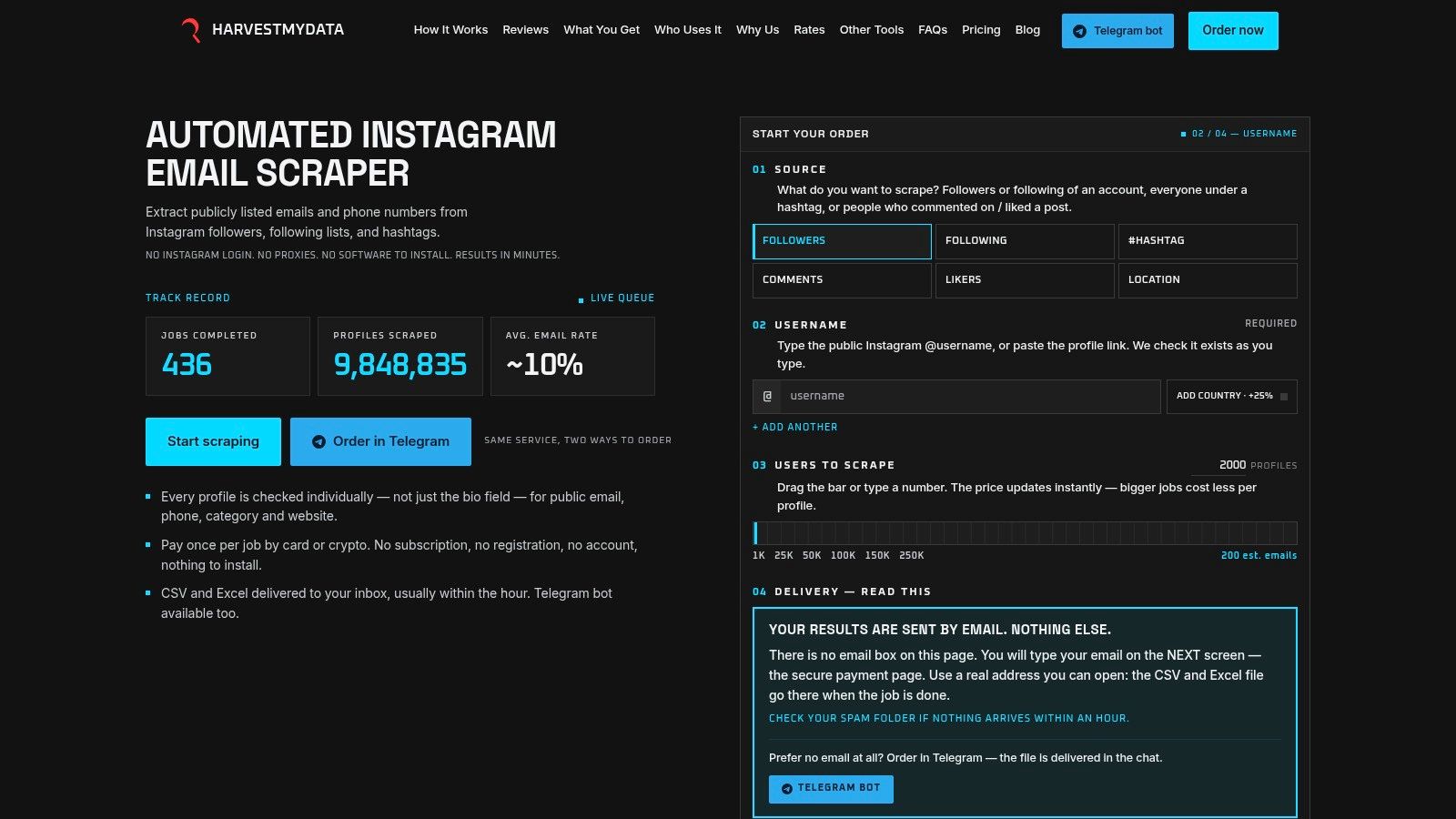
HarvestMyData extracts publicly listed contact details from Instagram audiences, including followers, following lists, hashtags, commenters, and post likers. You can order 1,000 to 250,000 profiles through the website or Telegram bot. There is no Instagram login, proxy setup, software installation, or subscription. Pay-per-job pricing starts at $3 for 1,000 profiles and reaches $99 for 250,000. A free trial of up to 1,000 accounts is available on request. Country detection costs an additional 25% of the base price and applies to profiles with emails.
Each profile is checked individually for public email addresses, phone numbers, category, and website information. Results come as UTF-8 CSV and Excel files, usually within an hour. You can close the browser while the job runs. A live status page tracks profiles fetched, emails found, and percent complete.
What you should expect back
The average email yield is about 10%, though results depend heavily on the niche. Business-focused segments such as fitness coaches, photographers, real estate agents, and ecommerce brands typically yield 15–30%. Following lists almost always produce better email rates than follower lists. Smaller niche accounts under 50,000 followers tend to yield more emails, while accounts with a million or more followers usually include more casual users. The useful target range is 10,000 to 250,000 followers.
A customer using the Telegram bot said: “Great service! The data looks tight, I've used private SERP tools etc but this was super smooth (excluding my user error).”
Validity's 2025 benchmark reports that approximately one in six legitimate marketing emails fails to reach the inbox. Validate contacts before importing them, remove role addresses and repeat bounces, and retain profile details so you can compare audience sources. These are publicly listed contacts, not guessed or generated addresses. Use the data lawfully, comply with CAN-SPAM and GDPR, avoid harassment, do not resell or redistribute raw data, and honor opt-out requests. For a broader look at contact data options for pipeline generation, compare how each source fits your prospecting workflow.
Practical rule: A focused segment with a known source is more useful than a larger file you cannot explain.
2. OptiMonk
OptiMonk's free tier is limited, while paid plans are billed monthly or annually. For a site with uneven traffic, check how pageview-based limits affect the plan before choosing it.
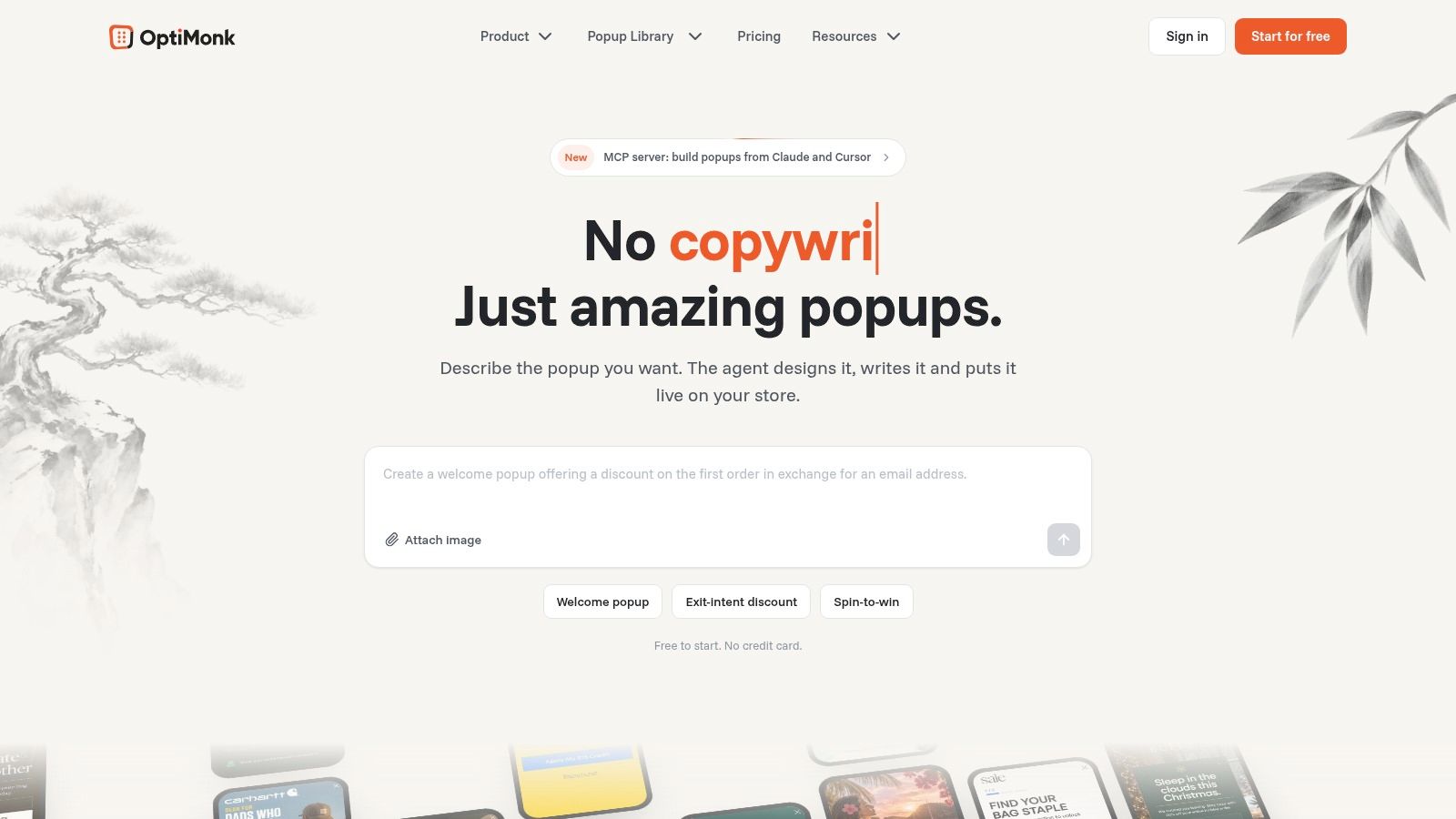
OptiMonk handles onsite capture rather than email delivery. Popups, embedded forms, and campaigns collect addresses for the email platform you already use. Visitor behavior and site context inform targeting, while A/B tests and campaign analytics help compare offers. Its AI assistant can draft and edit popups, but a person still needs to review the offer and consent language.
The 2025 NFIB Technology Survey found that 27% of U.S. small businesses reported using or planning to use AI for marketing or advertising, and 72% of new owners expected to use AI for marketing in the coming year. Apply the same review to AI-written popup copy: check the offer, consent language, and audience targeting. If your plan has a pageview limit, a traffic spike can interrupt signups. OptiMonk suits a site with established traffic and an email sender already in place; it does not replace the sender.
- Campaign setup: Paid plans support popup campaigns and remove OptiMonk branding.
- Traffic-based limits: Pageviews, domains, and AI credits can affect plan fit, especially when traffic fluctuates.
- Separate sending: Subscribers need to be exported or synced to an email platform for campaigns.
3. Privy
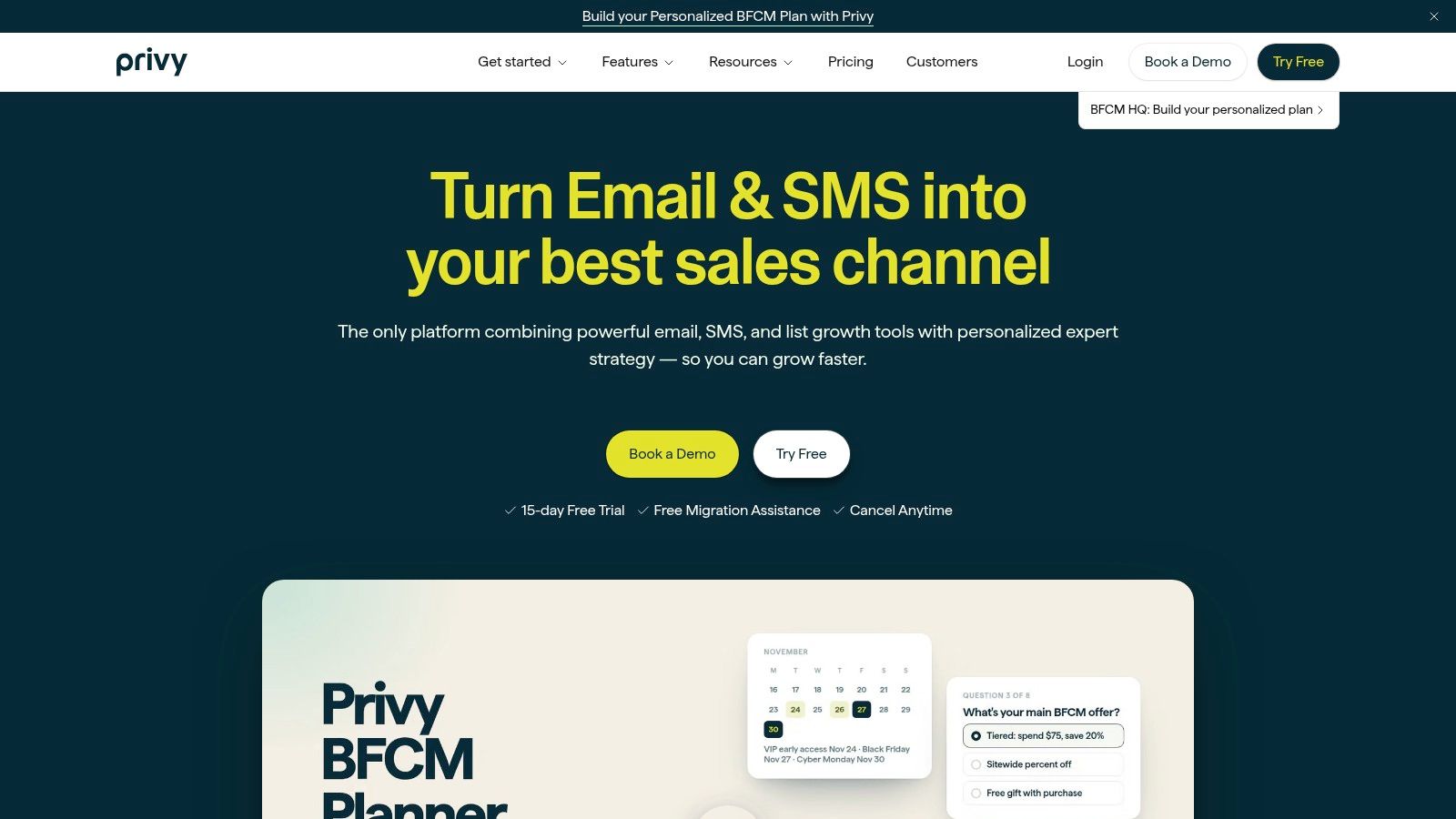
For a Shopify-style store choosing between an email capture tool and a combined marketing platform, Privy offers both in one account. Paid plans scale with mailable contacts or pageviews, depending on the product. Confirm current pricing and trial terms on Privy's pricing page before committing.
Popups, embeds, landing pages, and exit-intent displays collect addresses. Email and SMS campaigns handle follow-up in the same account. Spin-to-win wheels and multi-step forms provide alternatives when a single-field signup form performs poorly, while ecommerce integrations and segmentation help tailor offers to shopper activity.
If Klaviyo or another sender already manages your list, a capture-only plan avoids paying for overlapping campaign tools. Privy's combined setup is a better fit for a smaller store that wants to manage capture and follow-up together. It is less suited to B2B prospecting or a newsletter that does not sell products. Check how contact volume and SMS affect the bill, and estimate costs using the list size you expect to reach, not just your launch-day count.
Price the SMS add-on before you promise texts in the popup. The email plan and the text plan are not the same bill.
4. Omnisend
Omnisend offers a free plan and paid tiers whose prices rise with contact count. Check its current pricing page before committing, since contact and send limits can determine when an upgrade makes sense.
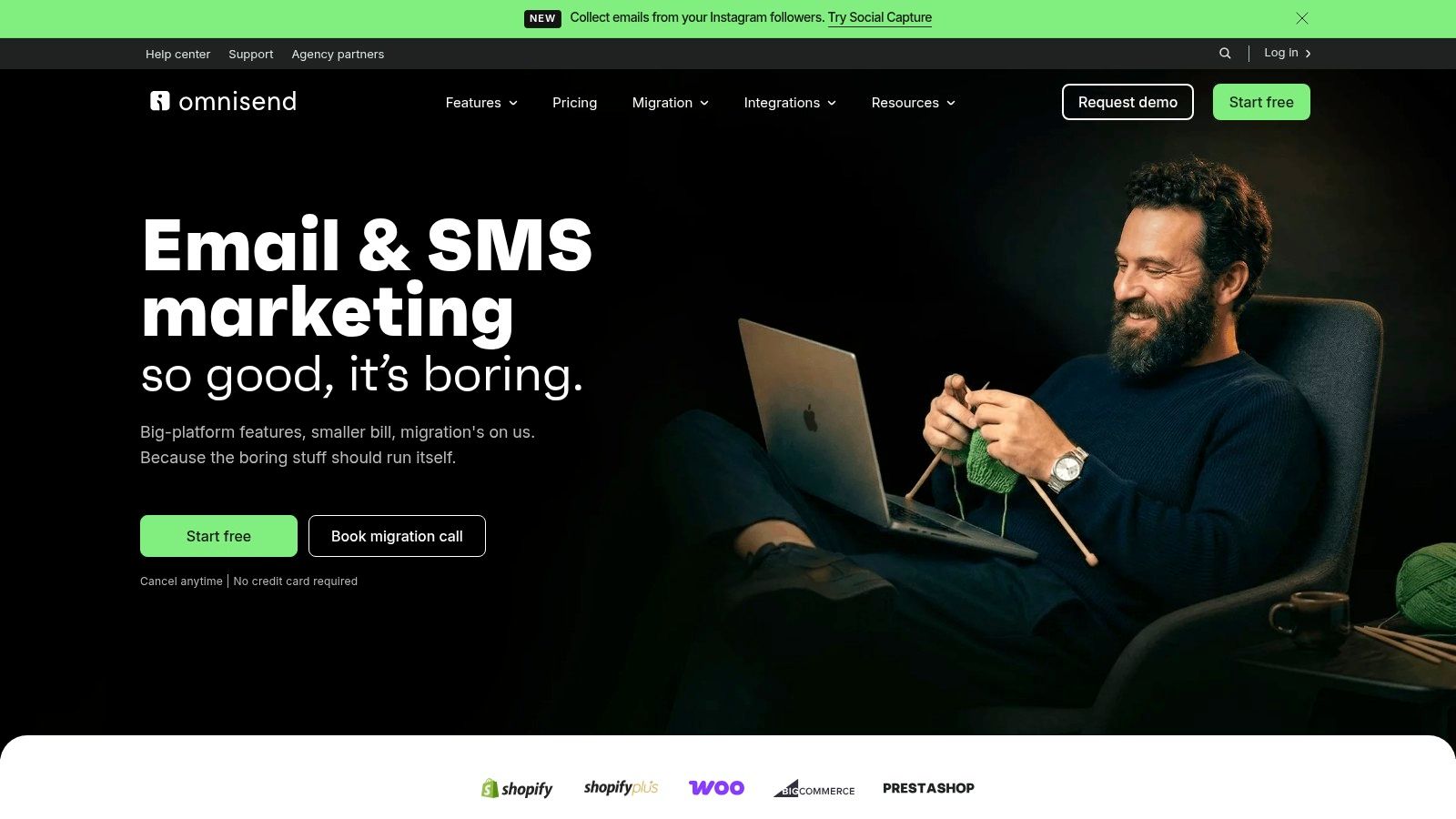
Omnisend combines signup forms with ecommerce follow-up. Popups, flyouts, and landing pages collect addresses; targeting, A/B tests, and conversion tracking help assess which offer works. Consent collection is built into forms, while discount codes and store integrations support ecommerce campaigns.
Templates and a visual editor let a store launch without a developer. The trade-off is overlap: if another platform already manages campaigns, segments, and suppressions, Omnisend can create a second set of tasks to maintain. Try the free plan to check whether its forms suit the shop, then upgrade when its limits constrain the list or sending needs.
5. Klaviyo
Klaviyo's free plan supports up to 250 profiles and 500 emails per month. That profile cap is the limit almost every new store hits first. Paid cost then tracks active profiles and how much you send.
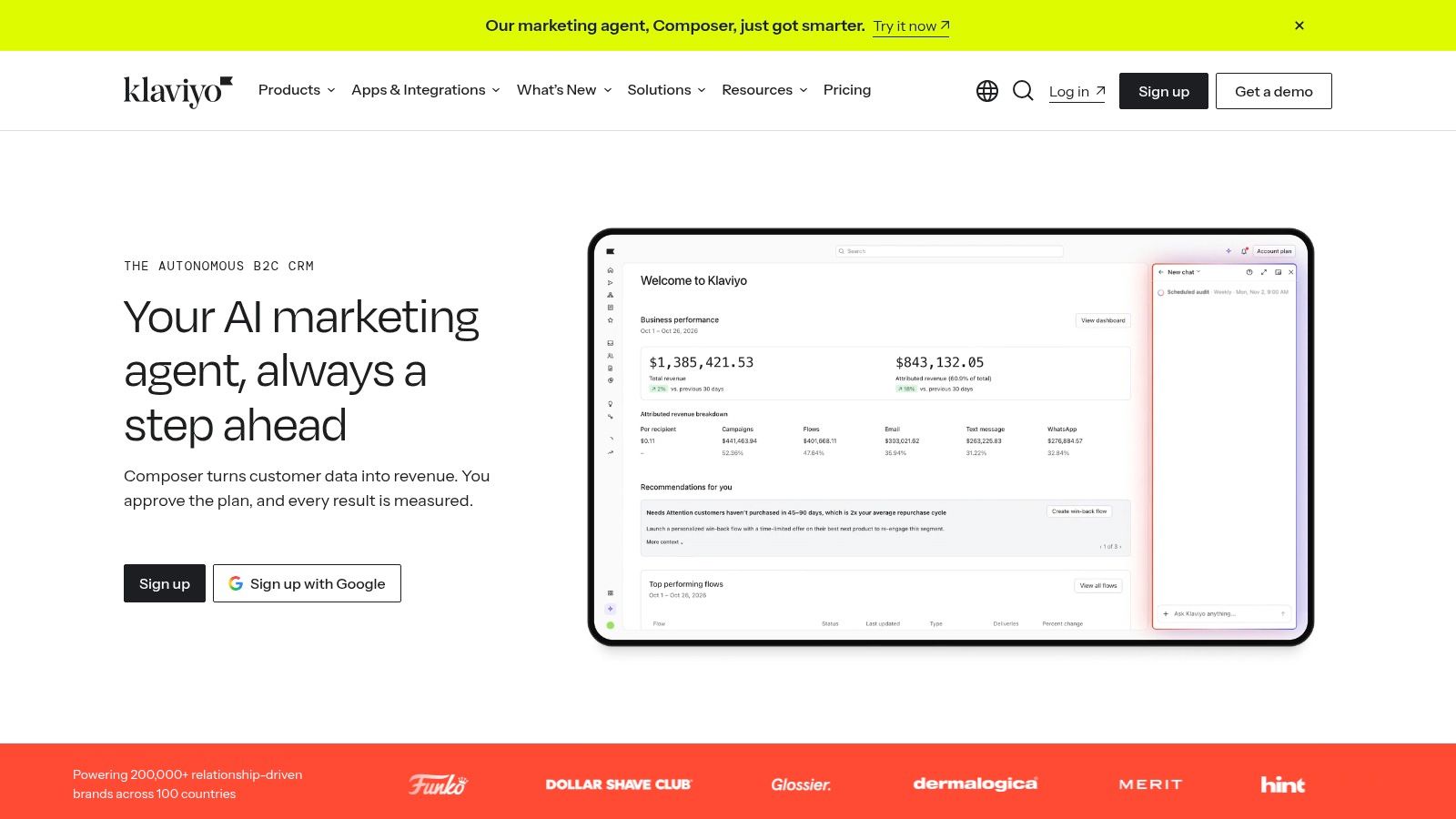
Signup forms sit next to email and SMS, and segments can use store behavior rather than a single "subscribed" flag. Reporting and integrations pull purchase data into the same audience you captured on the site. Personalization is the feature teams say they want. Sinch Mailjet reported that 41% of senders planned to include email personalization in their strategy in 2023. Klaviyo is one of the few tools here where that plan can be tied to what someone bought, not only to a first name.
I would pick it when the store's list should follow browse and purchase behavior, and when someone on the team will build those segments. I would skip it for a simple newsletter or a lead form on a services site. The ecommerce depth becomes unused settings, and profile pricing climbs as inactive buyers pile up. If retention flows are the goal, read how stores improve retention with automated marketing before you add another popup.
- Free tier is a trial in practice: 250 profiles and 500 sends disappear once welcome flows and a launch blast overlap.
- Forms connect to automations: A signup can enter a flow without a CSV export.
- Depth you may not need: A one-page lead form does not need commerce segments.
6. Brevo
A large list that sends infrequently may fit Brevo better than a smaller list with frequent campaigns. Its free plan limits daily sending more than stored contacts, so the daily cap is usually the first constraint for a large, quiet audience. Paid pricing rises with send volume.
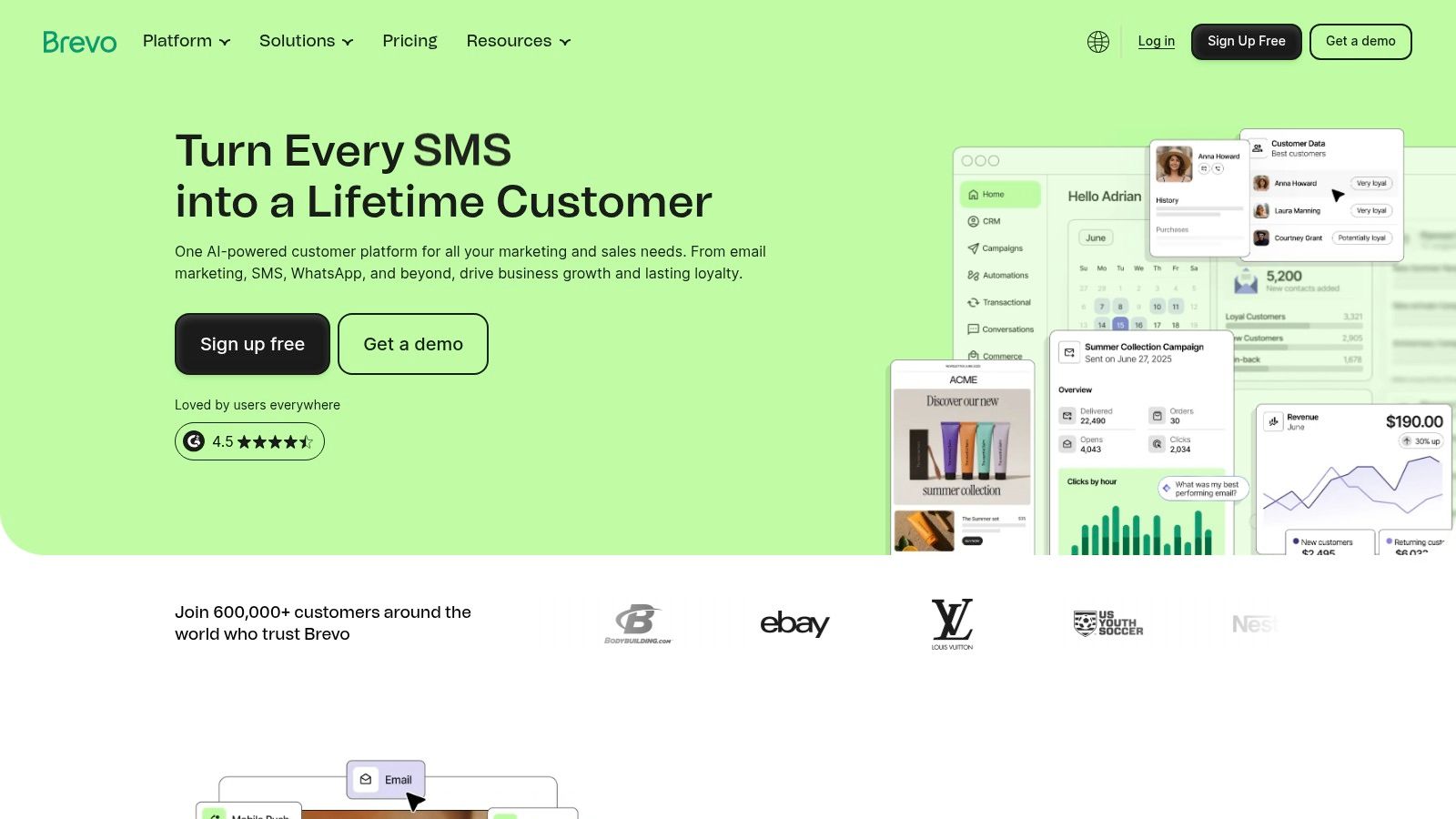
Brevo combines campaigns, forms, automation, SMS, WhatsApp, transactional email, and a light CRM. That range can suit an agency managing several client lists. For a small team sending only a monthly newsletter, some of those tools may go unused.
Estimate how often you plan to send before choosing a plan. A launch or recurring campaigns can push a team beyond the free daily limit, so check the current sending allowance and paid tiers against your schedule. If your list includes EU contacts, review the rules for consent and opt-outs in this guide to GDPR email marketing before importing addresses, whether they came from signups or public profiles.
7. Mailchimp
A growing contact list can change Mailchimp's cost even if you send infrequently. Its free and paid tiers have different limits and features, and paid pricing rises with contact count. Check Mailchimp's pricing page for current limits and prices before choosing a plan.
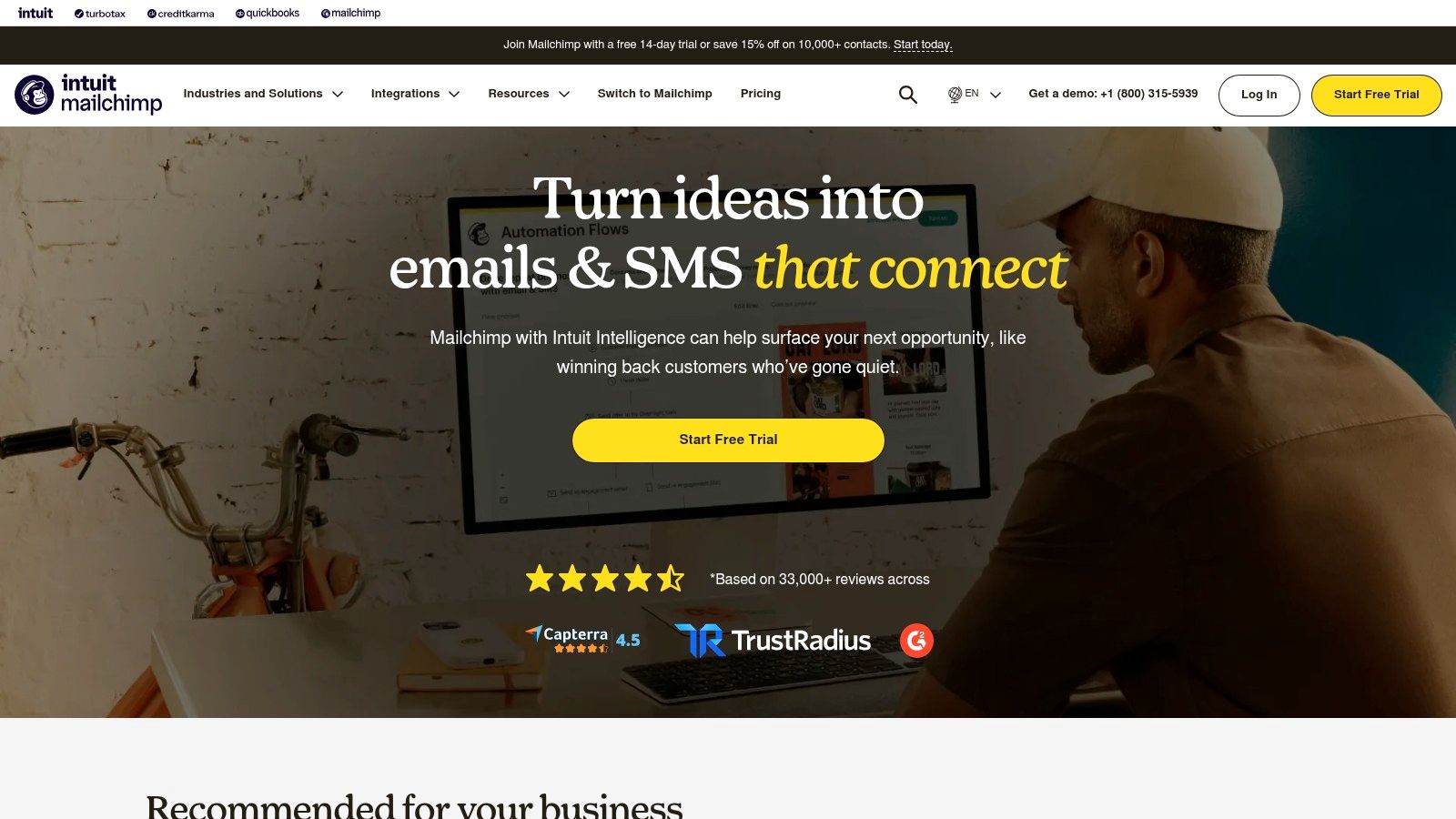
Forms, landing pages, and popups collect subscribers; campaigns, scheduling, reporting, audiences, and segmentation support sending. Automation is available on paid tiers. Check which features your welcome sequence needs before committing to a plan.
Mailchimp suits small businesses running standard newsletters to a mixed audience. As the list grows, remove unengaged and invalid contacts before moving to a higher-priced tier. This guide to email list cleaning tools covers bounces, role addresses, and subscribers who never open. For store campaigns that depend on detailed commerce segmentation, compare Mailchimp with Klaviyo or Omnisend.
8. MailerLite
MailerLite's pricing page asks you to pick a subscriber count before it shows a price. That is the right question, because subscriber count, not pageviews, is the limit that moves you off the free tier. Automation depth and sending allowance then depend on the plan you picked.
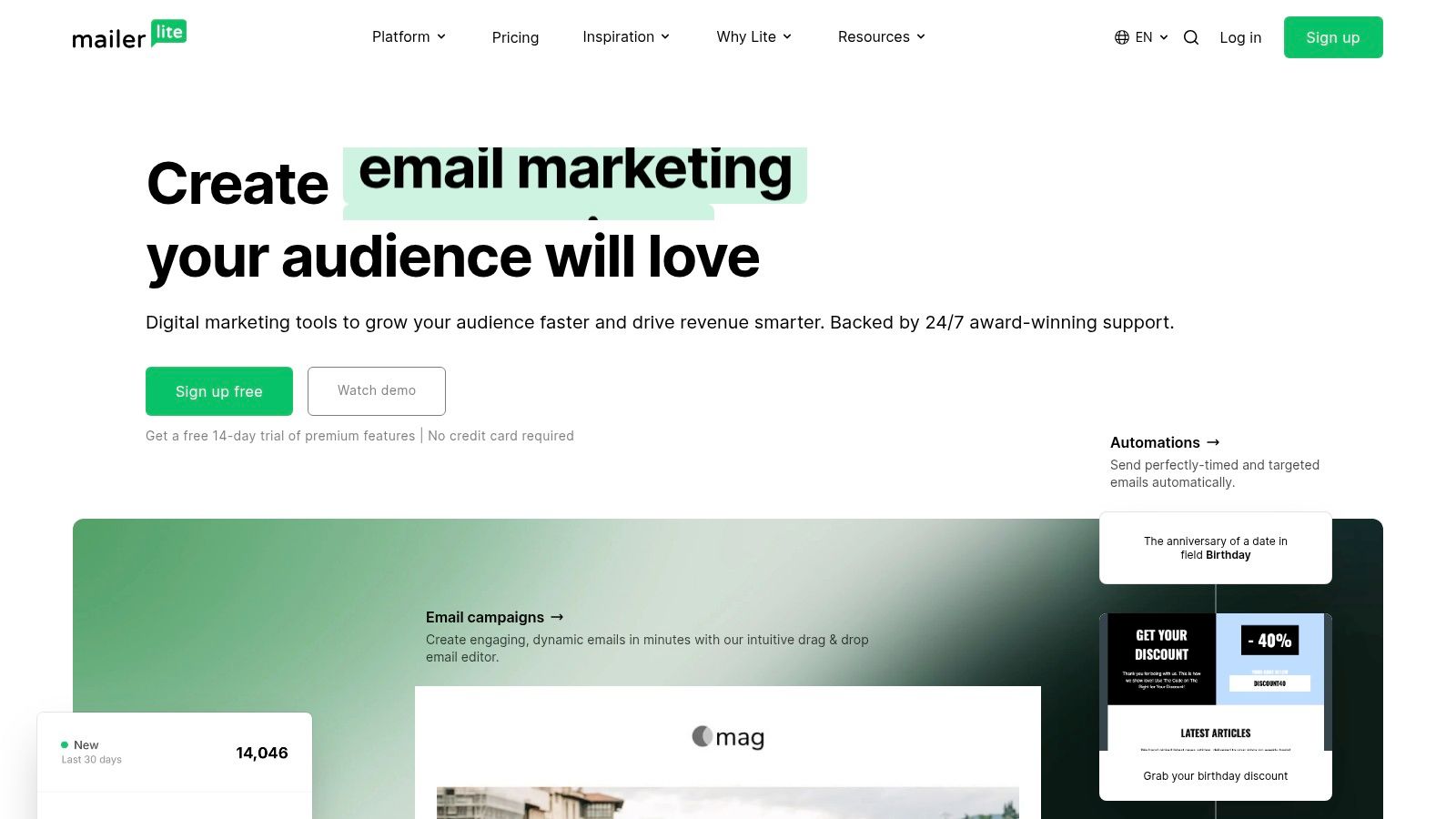
Signup forms and landing pages collect the address. Campaigns, automation, audiences, and integrations send to it. For a freelancer or a small consultancy, that is a complete stack without a store integration you will never use. It is less specialized for ecommerce data than Klaviyo or Omnisend, so product recommendations and purchase segments will feel thin.
Say a consultant publishes one landing page per service and wants a short nurture, not a cart flow. MailerLite fits. A shop that needs discount logic tied to SKUs will outgrow the forms even if the sending price still looks fine. If you are deciding whether the list should come from your site or from outreach, this walkthrough on how to build an email list separates those two jobs before you pick a plan.
Subscriber-based pricing is honest only if you delete people who should not be on the list. Dead contacts still count.
9. Kit
For a creator choosing between a newsletter tool and a store-focused platform, Kit's free plan is built around publishing: it covers up to 10,000 subscribers, with unlimited forms and landing pages. Visual automations and sequences require a paid plan. Creator pricing starts at $33 per month for the example tier and rises with subscriber count and billing choice.
Kit's core tools are broadcasts, tags, segmentation, and creator recommendations. Those fit publishers building an audience around their work. Recommendations can attract subscribers from other creators, but that growth is most useful when the audiences overlap. For a sales team, the same feature may add contacts without adding qualified prospects.
Where the free tier stops
A writer sending a weekly broadcast can collect signups with forms and pages on the free tier, then upgrade when automated follow-up becomes necessary. A founder who needs a branched welcome series from launch will need a paid plan. Subscriber growth can also increase the bill before revenue catches up.
Kit's creator-focused features are a poor fit for conventional ecommerce teams that need purchase data and cart recovery. Choose it for publishing and audience growth; choose a store-focused tool when customer activity needs to drive follow-up.
A roomy free plan does not guarantee a successful email program. The 2023 Inbox Insights survey by Sinch Mailjet of more than 3,200 senders found that 43.5% considered their email program somewhat successful and more than 16% considered it very successful. A list people asked to join is a better starting point than a large list collected without their consent.
10. beehiiv
A publication centered on a newsletter may fit beehiiv better than an ecommerce or general-purpose email platform. Its free Launch plan lets writers start publishing, while paid Scale pricing depends on subscriber count and billing term. Growth and automation features are available on paid plans.
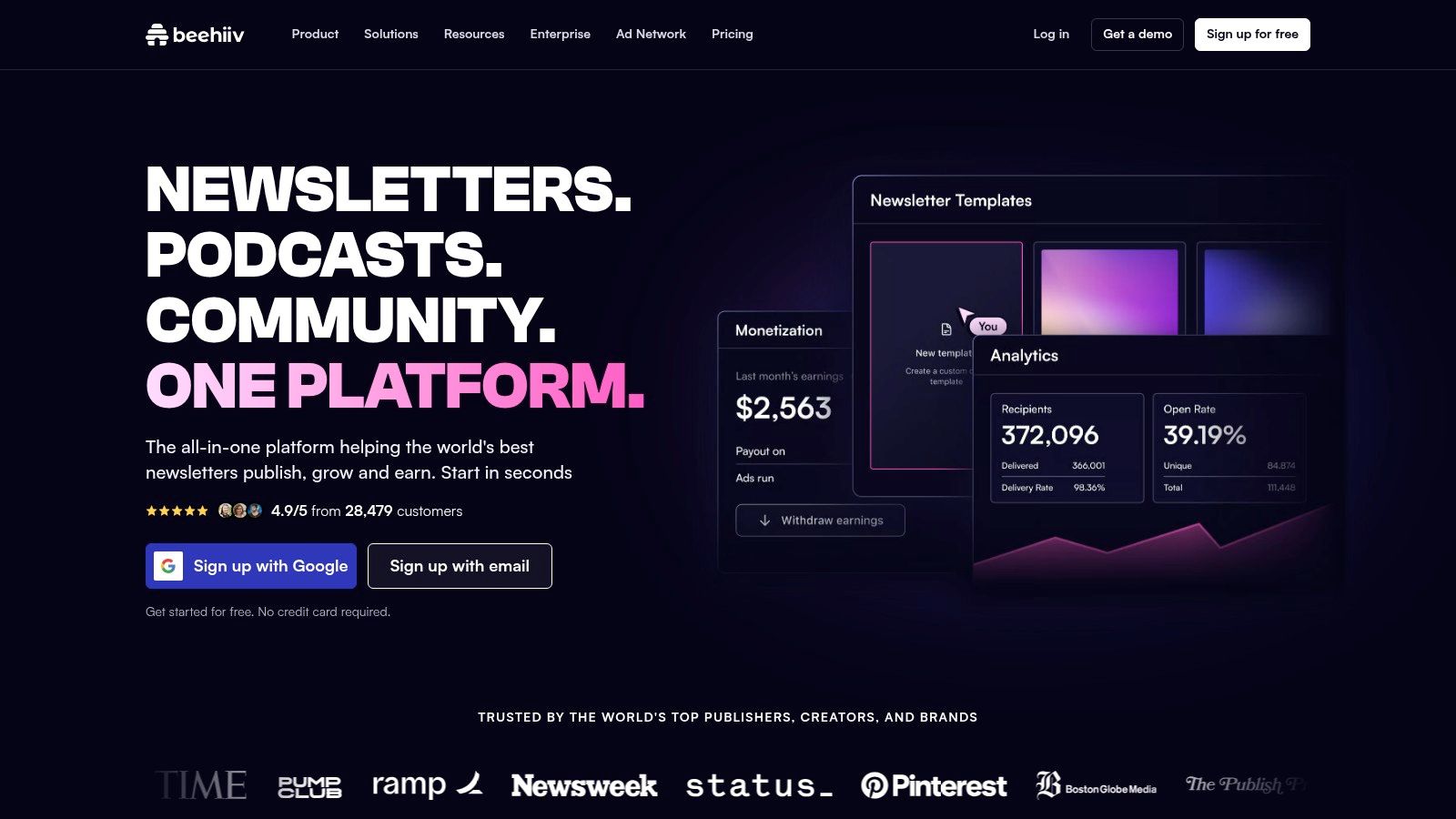
beehiiv combines a newsletter site, signup forms, a recommendation network, and analytics. That setup suits a weekly briefing, paid newsletter, or media brand. It is a weaker fit for a store that needs purchase-based segmentation or a sales team managing outbound prospects.
Use the recommendation network as one way to attract subscribers, not as proof that they will engage with your publication. Track whether new readers keep opening and clicking after they join, and weigh that against the paid plan's subscriber-based pricing as your list grows.
- Launch supports publishing: Start a newsletter before committing to a paid plan.
- Paid plans add growth tools: Check whether the automation and monetization features you need are included.
- Choose by job: beehiiv is built for newsletter publishing, not ecommerce lifecycle campaigns or outbound sales.
How the 10 Tools Compare on Price, Free Plans, and Best Use
The first constraint to check is the one that limits your list or workflow: profiles for Instagram prospecting, pageviews for popups, or subscribers and sends for email platforms. The table separates these jobs and shows each tool's listed entry point.
| Item | Starting Price | Free Plan | Best For |
|---|---|---|---|
| HarvestMyData | $3 per job for 1,000 profiles | Trial of up to 1,000 profiles on request | Instagram audience prospecting and public contact-data collection |
| OptiMonk | $19/month with annual billing | Yes, up to 10,000 monthly pageviews | Website popups and visitor conversion |
| Privy | $24/month for popups-only; $30/month for email | 15-day free trial | Ecommerce signup capture and email/SMS marketing |
| Omnisend | $11.20/month for the example Standard plan | Yes | Ecommerce email and SMS marketing |
| Klaviyo | Usage-based pricing | Yes, up to 250 profiles and 500 emails/month | Ecommerce marketing based on customer behavior |
| Brevo | $9/month | Yes, with a 300-email daily limit | Multichannel communications and email-volume pricing |
| Mailchimp | $13/month for Essentials | Yes, up to 250 contacts and 500 sends/month | General-purpose email marketing and list building |
| MailerLite | Depends on subscriber count | Yes | Small teams needing email, forms, and landing pages |
| Kit | $33/month for the example Creator tier | Yes, up to 10,000 subscribers | Creators and newsletter businesses |
| beehiiv | $43/month for Scale with annual billing | Yes, up to 2,500 subscribers | Newsletter publishing and audience growth |
Match the Tool to the Job Before You Buy
Start with the list you need this quarter. Site signups point to OptiMonk in front of a sender, or to Mailchimp, Brevo, and MailerLite when capture and campaigns should share one login. Ecommerce follow-up points to Privy, Omnisend, or Klaviyo, and the profile or contact cap will matter sooner than the popup templates. A newsletter points to Kit if you want a large free subscriber ceiling, or to beehiiv if the send itself is unlimited and the brand is a publication. Instagram outbound is a different job. You pay per profile checked, then you clean the file before any platform will treat it as a list.
Check the limit that binds first, then estimate it against the next six months. Pageviews stop OptiMonk. Profiles and sends stop Klaviyo and Mailchimp. Daily sends stop Brevo's free plan. Subscriber count moves Kit, beehiiv, MailerLite, and Omnisend. A job size, from 1,000 to 250,000 profiles, is the only cap on an Instagram extract, and email yield still depends on the niche.
Cloud delivery is why these files can move at all. Mordor Intelligence estimates that cloud platforms represented 88.62% of the email-marketing market in 2025, and that small and medium-sized businesses accounted for 57.94% of market revenue. The same forecast places the global market at USD 12.84 billion in 2025 and projects approximately 10.82% compound annual growth through 2031. A UTF-8 CSV with username, profile URL, email, audience source, and timestamp will import. A mystery spreadsheet will not.
Whatever the source, use the data only for lawful purposes, follow CAN-SPAM and GDPR, and honor opt-out requests promptly. Do not resell raw files. Do not mail a public address as if the person opted in on your site. Suppress bounces, keep the acquisition source, and start with a small send so one bad segment does not take the domain down with it.
If the list you need is people you find on Instagram, rather than visitors who already found you, we extract publicly listed emails and phone numbers from followers, following lists, hashtags, commenters, and likers and deliver CSV and Excel you can validate before any campaign. Order a job when you are ready, including a free trial of up to 1,000 accounts on request, at HarvestMyData.
We built HarvestMyData to handle all of this for you.
No proxies, no code, no account needed.